






















Choosing the Right Decking Material: Top 10 Considerations for Homeowners
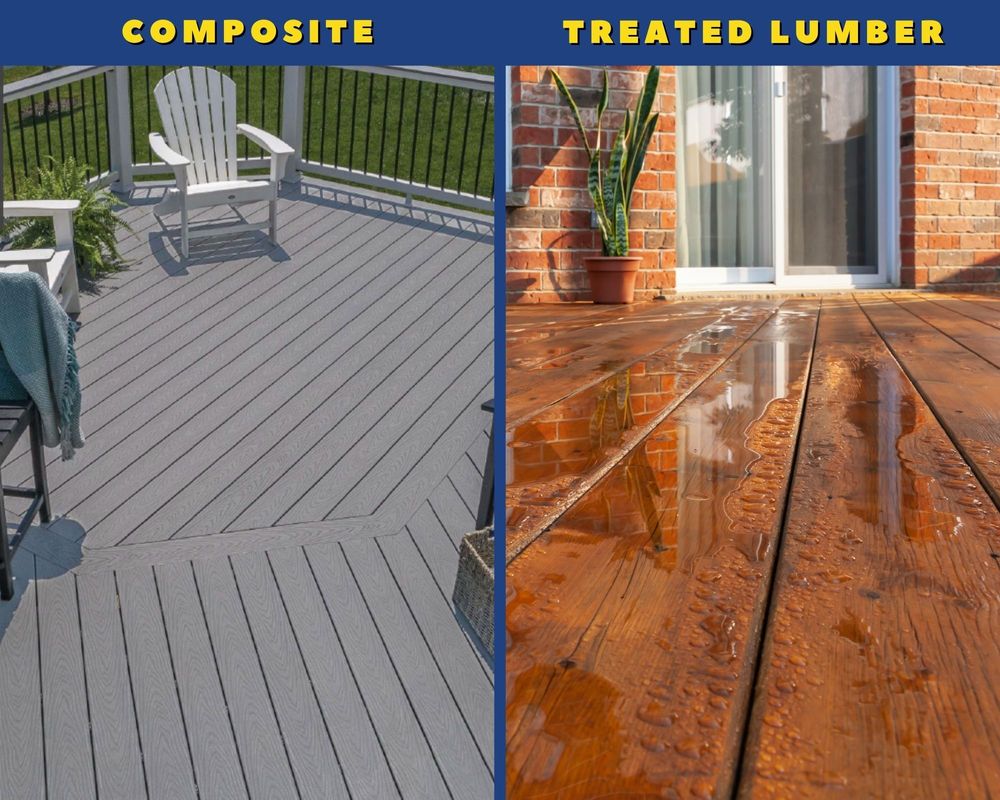
When it’s time to build a new deck, selecting the right decking material is crucial and depends on a variety of factors. Cedar, PVC, and Ipe are considered luxury materials, the two popular options homeowners often contemplate are composite decking and treated lumber. In this blog post, we will explore the top 10 considerations to help homeowners make an informed decision between composite decking and treated lumber. By evaluating factors such as durability, appearance, maintenance requirements, and sustainability, you can choose the decking material that best suits your needs and enhances your outdoor living space.
1) Durability and Longevity: Consider the lifespan and durability of the decking material. Composite decking, typically made from a combination of recycled plastics and wood fibers, offers exceptional resistance to rot, decay, and insect damage. Treated lumber, on the other hand, is chemically treated to improve its resistance to pests and decay. Both options can withstand the elements, but composite decking tends to have a longer lifespan with less maintenance required.
2) Visual Appeal: Examine the visual appeal of the decking materials. Composite decking comes in a wide range of colors, finishes, and textures, mimicking the natural look of wood. It offers consistent color throughout its lifespan and does not require staining or painting. Treated lumber has a classic wood appearance that can be enhanced with stains or paints to achieve a desired look. Consider your aesthetic preferences and the desired style of your deck when choosing between the two.
3) Maintenance Requirements: Evaluate the maintenance needs of the decking material. Composite decking requires minimal maintenance, as it does not need to be stained, painted, or sealed. Regular cleaning with mild soap and water is usually sufficient. Treated lumber requires periodic maintenance, including staining, sealing, or painting to protect it from the elements and maintain its appearance. Consider the time, effort, and cost associated with ongoing maintenance when making your decision.
4) Resistance to Fading and Staining: Examine the decking material's resistance to fading and staining. Composite decking is designed to resist fading caused by UV rays and is generally more resistant to stains from spills or weathering. Treated lumber may fade and requires regular staining or painting to maintain its color and protect against stains. If maintaining color consistency is important to you, composite decking may be a better choice.
5) Environmental Impact: Consider the environmental impact of the decking material. Composite decking, made from recycled materials, is considered a more eco-friendly option. It reduces the demand for new wood and helps divert waste from landfills. Treated lumber, while it may use sustainably sourced wood, requires chemical treatment, which may have environmental implications. Research the sustainability certifications, recycling programs, and eco-friendly practices of manufacturers to make an informed choice.
6) Cost: Evaluate the cost of the decking materials. Composite decking generally has a higher upfront cost compared to treated lumber. However, when considering the long-term maintenance and replacement costs, composite decking may offer better value. Treated lumber has a lower initial cost but may require regular maintenance and eventual replacement, which can add up over time.
7) Slip Resistance: Consider the slip resistance of the decking material, particularly in regions prone to wet or icy conditions. Treated lumber, with its natural texture and grain, often exhibits inherent slip-resistant qualities, making it less prone to slips and falls, especially when compared to some composite decking materials. While composite decking may have textured surfaces designed to improve traction, treated lumber's natural properties can provide a reliable grip, reducing the risk of accidents. However, it's essential to note that both materials can become slippery when wet, so additional precautions such as anti-slip coatings or mats may still be necessary for optimal safety.
8) Installation and Building Codes: Examine the installation requirements and building codes associated with the decking materials. Both composite decking and treated lumber require proper installation techniques. However, treated lumber may have additional considerations due to its natural properties and chemical treatment. Check with local building authorities to ensure that your chosen material meets the required building codes and regulations in your area.
9) Availability and Accessibility: Consider the availability of the decking material in your region. Composite decking is widely available and comes in various brands and styles. Treated lumber is also readily accessible but may vary in quality depending on the supplier. Ensure that your chosen material is easily accessible and that you can obtain the quantity and quality you need for your deck project.
10) Resale Value: Think about the potential impact of your decking material choice on the resale value of your home. Composite decking is often perceived as a high-quality, low-maintenance option, which can enhance the overall value of your property. Treated lumber can also add value, but its maintenance requirements may affect buyer perception. Consider how your material choice aligns with the preferences of potential buyers if you plan to sell your home in the future.
Ultimately, your personal preferences and lifestyle should guide your decision. Consider how much time you're willing to dedicate to maintenance, your desired aesthetic, and how you plan to use your deck. If you prefer a low-maintenance option and value a wide range of design choices, composite decking may be a better fit. If you enjoy the natural look of wood and don't mind occasional maintenance, treated lumber could be a suitable choice.
Choosing the right decking material involves careful consideration of various factors, each of which can significantly impact your deck's appearance, durability, maintenance requirements, and overall value. Ask your local R.P. Lumber for help evaluating these 10 key considerations—durability, aesthetics, maintenance, fading resistance, environmental impact, cost, slip resistance, installation, availability, and resale value—so you can make an informed decision that aligns with your needs and enhances your outdoor living space. Whether you opt for the modern versatility of composite decking or the classic charm of treated lumber, your thoughtful choice will result in a deck that you can enjoy for years to come.
CLICK HERE TO LEARN MORE ABOUT DECKING, RAILING, AND DECK LIGHTING.
How Can We Help?
If you need a quote or have a question about our products or services, please message us!
Contact Us